
For grief, heartbreak, memories & appeals · Composition and recording cleared · Buy once from €29.90
Sad & Emotional Background Music for Video
Sad music works when it matches the kind of sadness: grief needs space, heartbreak a pulse, nostalgia warmth, a charity appeal an ending that turns to hope. These are twelve slow piano and string pieces hand-picked by composer Paul Lorenz for exactly those scenes — each licensed once for €29.90, worldwide, with no expiry, paid ads and client work included, with an instant WAV download and a licence certificate.
Curated by Paul Lorenz — composer, arranger & conductor · his Violin Concerto No. 2 recorded by the London Symphony Orchestra at Abbey Road Studios · Vienna State Opera
500M+ streams · Gold & Double Platinum · Instant download · Lifetime worldwide license
Sad & Emotional Background Music for Video: hand-picked & sync-ready
Listen, then license: €29.90 per track, one-time · worldwide, for life · instant WAV download
.jpg)
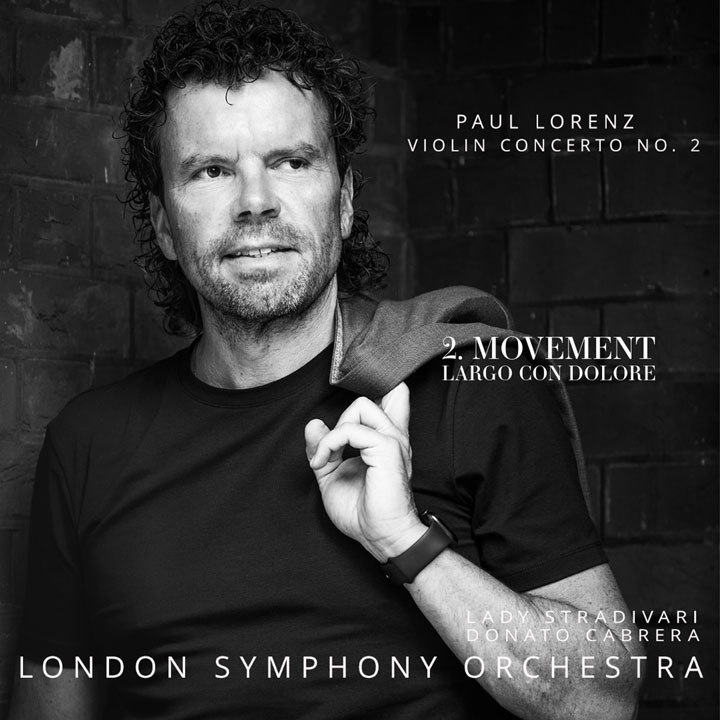
Violin Concerto No. 2: 2. Largo Con Dolore
London Symphony Orchestra
Mascagni - Intermezzo (from Cavalleria Rusticana)
Artyfile
The Person Behind the Platform
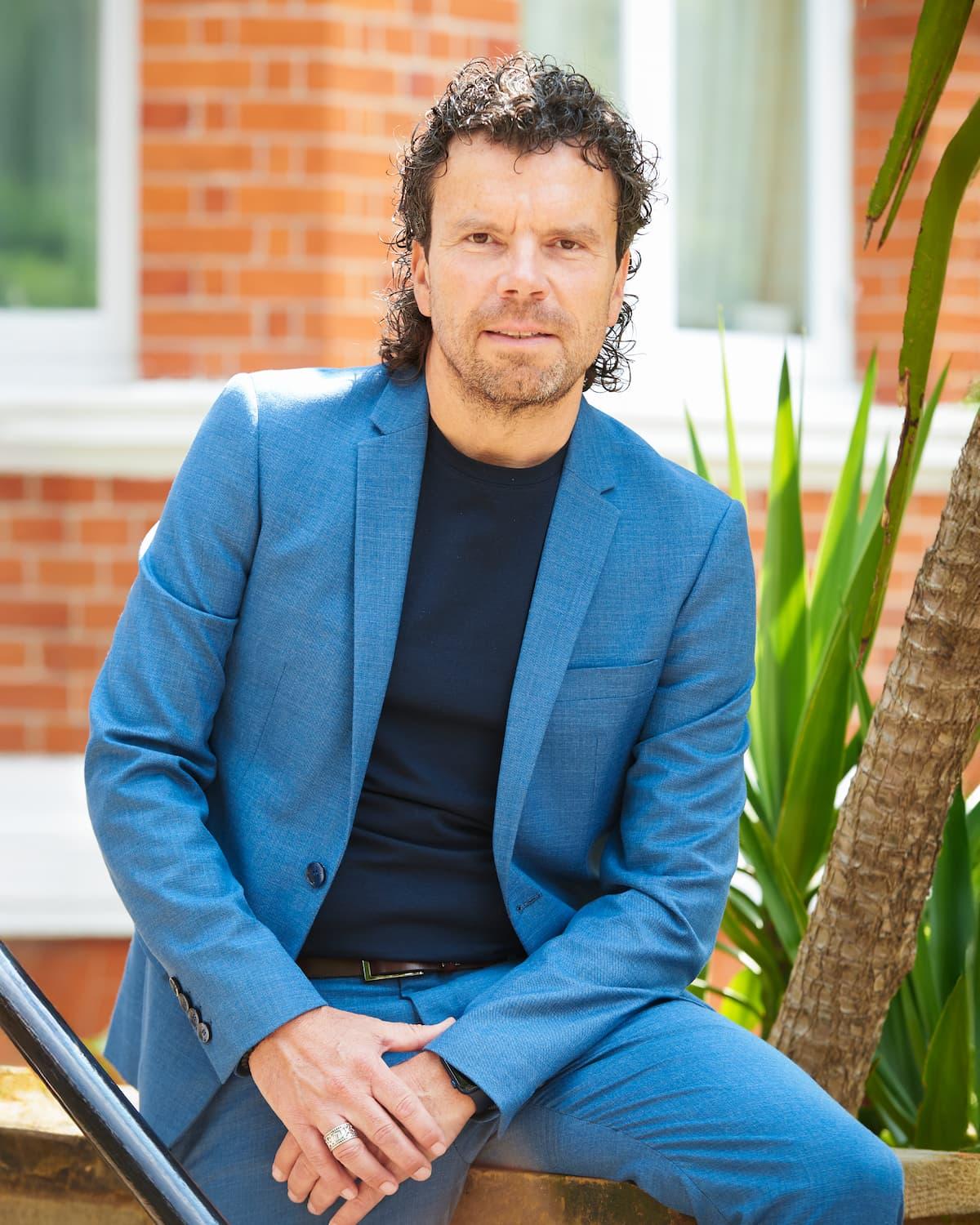
Paul Lorenz
Founder & CEO · Composer
“I spent 30 years inside the music industry — Abbey Road, the London Symphony Orchestra, the major labels — and watched composers get paid fractions of their worth. Artyfile is the platform I wished existed: investment-grade music, owned outright, with composers who finally share in the upside.”
- 30 years in music — over 500 million streams across his catalog
- Collaborations with Universal Music, Sony Music & Warner
- Composes for the London Symphony Orchestra — his Violin Concerto No. 2 recorded at Abbey Road Studios
- Founder-owned: a named composer behind the catalog, not an anonymous library
Sad-scene matcher · which kind of sad?
Which sad music fits your scene?
“Sad” is not one mood. Grief wants space, heartbreak wants a pulse, nostalgia wants warmth, and a charity appeal has to end on hope. Pick the feeling you are cutting: you get what the music has to do, the sound that does it, how it sits under a voice and where to bring it in — plus two tracks from this collection.
Grief, loss & farewell
What the music has to do
Hold the silence without filling it — let the audience feel the loss instead of being told to cry
The sound that does it
Very slow solo piano, sparse phrases with long pauses, a soft dynamic that never swells into drama
Under a voice or interview?
Excellent — a sparse piano line leaves the speech range free; keep the music well below the voice
Where to bring it in
After the first line of the story, not on the first frame. Let the last chord ring out instead of fading early.
Try these tracks
Bis wir uns wiedersehen (Paul Lorenz, solo piano) · Alone (Paul Lorenz, solo piano)
The sad-music cheat-sheet: what each kind of sad scene needs, and which tracks fit
| What are you cutting? | What the music has to do | The sound that does it | Under a voice or interview? | Try these tracks |
|---|---|---|---|---|
| Grief, loss & farewell | Hold the silence without filling it — let the audience feel the loss instead of being told to cry | Very slow solo piano, sparse phrases with long pauses, a soft dynamic that never swells into drama | Excellent — a sparse piano line leaves the speech range free; keep the music well below the voice | Bis wir uns wiedersehen (Paul Lorenz, solo piano) · Alone (Paul Lorenz, solo piano) |
| Heartbreak & breakup | Carry an inner ache with a pulse — the scene is about someone who is still moving | Slow minor-key piano with a steady pulse; electric piano for a modern, intimate colour | Good — the steady pulse gives voice-over a grid to land on | Broken Heart (David Whitman, electric piano, 60 BPM, C minor) · Without You (David Whitman, solo piano) |
| Nostalgia & memories | Make old footage feel warm and a little bittersweet — memory, not mourning | Tender piano in the middle register, a melody you could hum, gentle rubato | Good — keep the melody low in the mix while somebody speaks | Rainy Days (Paul Lorenz, solo piano) · Somebody You Loved (Paul Lorenz, solo piano) |
| Loneliness & quiet reflection | Stay with one person in an empty space — the music is their inner monologue | Slow, repetitive piano figures with lots of room; minimal harmony, little movement | Excellent — the repetition sits underneath a narrator without competing | Calm Thoughts (Paul Lorenz, solo piano, 60 BPM, A minor) · Alone (Paul Lorenz, solo piano) |
| Hope after loss | Start in sadness and turn towards light — the arc of a recovery story or a closing scene | Bittersweet piano that opens up harmonically towards the end; a tune that resolves | Good — bring the music up in the final third, when the story turns | Last Dance (David Whitman, electric piano, 62 BPM, A minor) · They Don't Know (David Whitman, electric piano) |
| Charity, cause & awareness appeal | Create empathy without manipulation, then leave room for the call to action | Restrained piano that builds gently; nothing so heavy that it overwhelms the testimony | Essential — appeals are voice-led; music stays a bed and leaves the speech range free | They Don't Know (David Whitman, electric piano) · Rainy Days (Paul Lorenz, solo piano) |
| Documentary & true story | Support a real person’s story without editorialising — the facts carry the emotion | Calm, reflective piano with very little melody; no dramatic swells under interviews | Excellent — reflective beds under interviews are what this sound is for | Sounds of the Waves (Paul Lorenz, solo piano) · Calm Thoughts (Paul Lorenz, solo piano, 60 BPM, A minor) |
| Dramatic climax & tragic ending | The moment the whole story pays off — the music may finally say everything | A full orchestra with a long melodic arc: the Largo “with sorrow” from Paul Lorenz’s Violin Concerto No. 2 (London Symphony Orchestra), or Mascagni’s Intermezzo for strings | Better without — at the climax, let picture and music carry it alone | Violin Concerto No. 2: II. Largo con dolore (Paul Lorenz, London Symphony Orchestra, Abbey Road) · Mascagni — Intermezzo (Cavalleria Rusticana) (Pietro Mascagni, string orchestra) |
Rights · famous songs & “free” music
Can I use a famous sad song in my video?
Only with two licences: a synchronisation licence from every music publisher that holds rights in the song, and a master licence from the label for the recording. If you play the song yourself, you skip only the master licence — you still need the composition from the publisher. Either side can refuse or set an individual price, even for a tribute video or a charity appeal. At Artyfile the composition and the recording come from one licensor: €29.90 once per track, worldwide, no expiry, campaigns and client work included.
On YouTube a cover can only earn ad revenue if the publisher claims the song through Content ID — that is revenue sharing, not a licence, and it does not apply anywhere else.
Is “free” sad music really free? What the providers themselves say
| Source | Your own video (YouTube, social) | Charity appeal, ad, client work | Content ID claim possible? |
|---|---|---|---|
| Famous song (original or your own cover) | Only with a sync licence from every publisher (+ master licence for the original) | Only with both permissions, negotiated individually | Likely — publishers routinely claim covers via Content ID |
| Pixabay | Yes — as part of a video, not as a standalone file | Commercial use allowed | Yes for tracks with a shield icon — even when used legally, says Pixabay |
| YouTube Audio Library | Yes on YouTube; Creative Commons tracks need credit in the description | YouTube gives no guidance on use outside YouTube | Check each track’s licence line |
| Creative Commons “NC” (non-commercial) | Yes if non-commercial — with attribution | Grey zone: Creative Commons says the use decides, not being a nonprofit | Depends on the creator |
| TikTok & CapCut sounds | Yes inside the app — the general library is for personal accounts | Only the Commercial Music Library; CapCut sounds only on CapCut and TikTok | Yes outside the app — the licence does not travel |
| Subscription library | Yes — for videos published while you subscribe | Depends on the tier — ads and client work often only in higher tiers | Usually handled by whitelisting your channel |
| Artyfile Basic (€29.90) | Yes — worldwide, for life, no subscription | Yes — campaigns, paid ads and client work included | A claim may appear; it is not a copyright strike, the music’s ad revenue goes to Artyfile |
As of October 2026, from the official pages of the providers named (sources below). Terms change — check the current version before you publish.
Why does music sound sad?
In 2003 the music psychologists Patrik Juslin and Petter Laukka reviewed more than a hundred studies on how emotion is expressed in speech and in music (Psychological Bulletin 129/5). For sadness they found the same cues in both:
- slow tempo
- low sound level with little variation
- little high-frequency energy — a dark tone
- low pitch with little movement, tending to fall
- soft, slow tone attacks and connected playing (legato)
That is why a slow, quiet piano with a soft touch carries a sad scene — and still leaves room for a voice. Where measured, the tracks in this collection sit at 60–62 BPM.
What you should honestly know
- On YouTube a Content ID claim may appear; it is not a copyright strike. With Basic, the ad revenue claimed for the music goes to Artyfile. The claim stays on the video; your licence remains fully valid.
- If the video is shown publicly — at a funeral service, a gala or an event — that is public performance. The organiser or venue settles it with its collecting society, as with any music. Artyfile music is registered with GEMA; no additional collection-society fee applies to the sync licence itself.
- The licence is not exclusive — others can license the same track. Exclusive for a campaign, or composed for your film: individual quote.
Sources
- Pixabay — FAQ & licence summary
- YouTube Help — Audio Library
- Creative Commons — FAQ (NonCommercial)
- TikTok — Commercial Music Library
- CapCut — Materials licence
- Harry Fox Agency — synchronization licences
- YouTube Help — monetising cover songs
- Juslin & Laukka (2003), Psychological Bulletin 129(5)
- GEMA — Information „Royalty Free“ / „GEMA-frei“
What is the best sad background music for a video?
The best sad background music is slow, quiet and sparse — and it fits the specific feeling of your scene rather than “sad” in general. Music psychology backs this up: the cues listeners read as sadness are a slow tempo, a low and steady sound level, a dark tone, low and falling pitch and soft, connected playing (Juslin & Laukka, *Psychological Bulletin*, 2003). A slow solo piano does all of that and still leaves room for a voice; a string orchestra is the tool for the one moment where the music may say everything.
That is why this collection is mostly piano — with two orchestral pieces for the climax:
- Grief and farewell — Bis wir uns wiedersehen and Alone: very slow, with long pauses.
- Heartbreak — Broken Heart (electric piano, 60 BPM, C minor) and Without You.
- Nostalgia and memories — Rainy Days and Somebody You Loved.
- Quiet reflection and documentary — Calm Thoughts (60 BPM, A minor) and Sounds of the Waves.
- Hope after loss — Last Dance (62 BPM, A minor) and They Don't Know.
- The dramatic climax — the Largo con dolore from Paul Lorenz’s Violin Concerto No. 2, recorded by the London Symphony Orchestra at Abbey Road Studios, and Mascagni’s Intermezzo from Cavalleria Rusticana for strings.
How do you put sad music under a voice-over or an interview?
Keep the music clearly below the voice — roughly 18–22 dB under it, then adjust by ear. Duck the music under every sentence and let it come up in the pauses and the B-roll. Sparse piano helps here because it leaves the speech range free; avoid big swells while someone is talking. For YouTube, a finished mix around −14 LUFS is the commonly reported playback reference — louder mixes are turned down.
For cutting: at 60 BPM one 4/4 bar lasts exactly four seconds, so a photo or clip change on every bar gives a calm, even rhythm. Change pictures on phrase ends rather than on random beats, and let the last chord ring out instead of fading early.
Can a charity or nonprofit use this music in a fundraising appeal?
Yes. An appeal video, a campaign ad and a social post for your organisation are all covered by the €29.90 licence — an agency producing the appeal for you can license the track itself as client work. That matters because “non-commercial” free licences are a grey zone here: Creative Commons itself says that being a nonprofit does not decide whether a use is non-commercial. Keep the music restrained under the testimony and leave the last bars clean for the donation link — the story should move people, not the soundtrack.
If the appeal is a memorial or tribute slideshow, the memorial music guide has length and pacing advice for exactly that format.
Who composed this music?
Seven of the twelve pieces are original works by Paul Lorenz — composer and arranger behind more than 500 million streams and Gold and Double Platinum records — and four by David Whitman; all are composed by people, never AI-generated. Ten are piano and electric-piano pieces, released under the artist names Paul Lang, Paul Lorenz, Anna Sterling and Celine Meyle. The slow movement of Paul Lorenz’s Violin Concerto No. 2, *Largo con dolore* — “slow, with sorrow” — was recorded by the London Symphony Orchestra at Abbey Road Studios in July 2022, conducted by Donato Cabrera. The twelfth piece is our own string recording of Pietro Mascagni’s Intermezzo, a composition in the public domain.
What does the licence cover?
€29.90 once per track (Basic) buys the synchronisation and master rights from one licensor: YouTube, social media, websites, films and documentaries, paid ads and client work — worldwide and with no expiry date, plus an instant 44.1 kHz WAV and a licence certificate. On YouTube a Content ID claim may appear; it is not a copyright strike, and with Basic the music’s ad revenue goes to Artyfile. If you would rather own part of a recording, Limited Edition is €69.90 per 1 % share of the master — any income from it may be zero. See all prices.
Looking for more? Piano music for video is sorted by use, dramatic background music covers bigger orchestral emotion, and music for documentaries covers reflective beds for longer films.
Cost comparison · buy once vs subscribe
Buy the tracks you use — or rent a whole library forever?
How many tracks will you actually use?
Same tracks, priced two ways
Artyfile — buy once
One-time · keep every track for life · reuse in unlimited future videos · safe everywhere
€149.50
one-time · yours for life
Subscription library
Recurring — only valid while you keep paying; stop and you can’t use the tracks in anything new
€432–€720 over 3 yr
recurring
“Free” / royalty-free
No upfront cost, but risk of a Content ID claim, no off-platform licence and nothing you own
€0
risk later
From €149.50 one-time — versus €432–€720 to rent. And every Artyfile track is yours for life.
Subscription figures are typical market ranges for the major libraries’ personal and commercial plans and vary by tier and term. Only Artyfile’s price is exact: €29.90 per track, one time, with sync + master cleared together — no extra GEMA fees, subject to YouTube Content ID rules.
Why Artyfile
Composed by people, never AI
Originals mostly by Paul Lorenz (500M+ streams, Gold & Double Platinum records) and David Whitman — solo piano and electric piano, plus two orchestral pieces: the Largo from Paul Lorenz’s Violin Concerto No. 2, recorded by the London Symphony Orchestra at Abbey Road Studios, and Mascagni’s Intermezzo. No generated mood loops.
Made for the quiet scene
Slow, sparse and with room for a narrator or an interview — every track previewable in full before you lay it under your story.
Cleared for appeals, ads & clients
Sync & master rights directly from Artyfile, worldwide & for life — campaigns, paid ads and client projects included. A Content ID claim may appear; it is not a copyright strike.
€29.90 once, no subscription
No monthly fee, no renewal, instant 44.1 kHz WAV download with a licence certificate.
Frequently asked questions
What kind of music is used for sad scenes?
Usually slow, quiet music with a dark tone and soft, connected playing — most often solo piano or strings. Music psychology research (Juslin & Laukka, 2003) found that listeners read slow tempo, low and steady volume, low falling pitch and soft attacks as sadness. Piano suits intimate scenes and voice-overs; strings suit the dramatic climax.
Where can I find sad background music for a YouTube video?
Free libraries, subscription libraries or pay-per-track licences. Free tracks often come with conditions (credit, non-commercial use only, possible Content ID claims), and subscriptions cover new videos only while you pay. At Artyfile you license a track once for €29.90 and use it worldwide, with no expiry, including monetised videos (a Content ID claim may appear; the music’s ad revenue goes to Artyfile).
Is free sad music from Pixabay or the YouTube Audio Library safe to use?
It can be, within its terms. Pixabay allows commercial use but says tracks marked with a shield are in Content ID and may be claimed even when used legally. Creative Commons tracks in the YouTube Audio Library need credit in the description, and YouTube gives no guidance on using them outside YouTube. Check each track’s licence before you publish.
Can I use a famous sad song like Hallelujah in a tribute or memorial video?
Only with a synchronisation licence from every publisher of the song and, for the original recording, a master licence from the label. Recording the song yourself still needs the publisher’s licence. Both can refuse or set an individual price. A licensed original piece avoids that: composition and recording come from one licensor.
How much does sad music for a video cost at Artyfile?
€29.90 once per track with the Basic licence: synchronisation and master rights, worldwide, no expiry, paid ads and client work included, with an instant WAV download and a licence certificate. There is no subscription.
Can I use this music in a charity appeal or for a client?
Yes. Fundraising appeals, campaign ads and social posts for your organisation are covered, and an agency or editor can license a track for a client project. If the video is played at a public event, that screening is public performance, which the organiser settles with its collecting society.
Will I get a Content ID claim on YouTube?
A Content ID claim may appear, because Artyfile registers its catalogue with a monetisation policy. A claim is not a copyright strike. With Basic, the ad revenue claimed for the music goes to Artyfile, not to your channel. Your licence stays fully valid.
What tempo is sad music?
Slow. Sad music usually sits well below a walking pace; where measured, the tracks in this collection are at 60–62 BPM. At 60 BPM a 4/4 bar lasts four seconds, which makes it easy to time photo or clip changes to the music.