
Licensing
Royalty-Free vs Copyright-Free vs Public Domain Music
Royalty-free means you pay once, copyright-free is a loose label, public domain means copyright expired. What each covers and why the recording matters.
By Paul Lorenz · · Updated · 8 min read
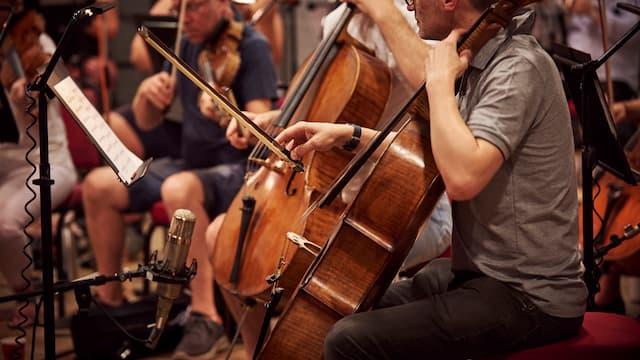
Three labels, three very different promises. Mixing them up is the most common reason a creator ends up with a claim on a video they thought was safe.
What is the difference between royalty-free, copyright-free and public domain?
Royalty-free describes how you pay, copyright-free describes a claim about the rights, and public domain describes the legal status of a work. Only one of them, public domain, means nobody owns the composition any more. Here is how they compare in practice:
| Term | What you pay | What stays protected | Typical risk |
|---|---|---|---|
| Royalty-free | One-time licence fee, no per-use royalties | Composition and recording, both owned by the licensor | Licence scope is narrower than you think (platforms, clients, broadcast) |
| Copyright-free | Usually nothing | Depends: often the music is simply licensed, not free of copyright | The label is used loosely; there may be no real licence behind it |
| Public domain | Nothing for the composition | The specific recording, arrangement or edition, if it is recent | Using a protected recording of a free composition |
| Creative Commons | Nothing | Everything; you get a licence with conditions | Missing attribution, NC or ND conditions ignored |
| "Free" music | Nothing | Whatever the uploader did not actually own | No proof of rights when a claim or letter arrives |
Why do the composition and the recording have separate rights?
Because a piece of music you hear in a video is two things: the work someone wrote and the recording someone made of it. Each has its own owners and its own term of protection.
- The composition (melody, harmony, lyrics) belongs to the composer, lyricist and their publisher. In the EU, UK and much of the world, it is protected until 70 years after the end of the year in which the last author died, for example under §64 of the German Copyright Act. In the US, works created since 1978 get the author's life plus 70 years.
- The recording (the master) belongs to the label or producer, and the musicians hold performers' rights in it. In the EU, Directive 2011/77/EU set that term at 70 years after the recording is published; Germany applies it in §85 (producers) and §82 (performers) of its Copyright Act.
For a video you need both: the right to synchronise the composition to picture and the right to use that specific master. That is why a sync licence and a master licence are usually quoted together, and why free classical music is rarely as free as it looks.
When does music become public domain?
For the composition, 70 years after the composer's death in Europe; in the US, as of 1 January 2026, anything published before 1931. Some examples:
- Beethoven died in 1827, so his symphonies are public domain everywhere.
- Ravel died in 1937, so his works are public domain in most of Europe; in the US, Bolero (published 1929) entered the public domain on 1 January 2025 under the 95-year rule for older published works.
- A recording of Beethoven's Fifth that was published in 2019 is protected in the EU until the end of 2089.
US sound recordings follow their own schedule. Under the Music Modernization Act, recordings published before 1926 are public domain as of 2026, and recordings made between 1957 and 14 February 1972 stay protected until 15 February 2067. The practical rule does not change: a free composition does not make a recording free. The same trap applies to traditional tunes, as we explain in is German folk music royalty-free?
Is "free" music the same as royalty-free?
No. Free describes the price; royalty-free describes a licence model. Free sources range from genuinely generous licences to uploads the uploader never had the right to share. Before you use a free track, check three things:
- Is there a written licence? A download button is not a licence. Look for terms that name the track and the permitted uses.
- Does it allow your use? Commercial videos, client work, paid ads and broadcast are often excluded.
- Can you prove it later? If a claim or a lawyer's letter arrives in two years, you need a document, not a memory of a website.
We walk through the hidden costs in the true risks of "free" royalty-free music.
What do Creative Commons licences require?
All six standard Creative Commons licences require attribution; the letters after BY add conditions. CC licences are real, legally sound licences, but they are easy to breach by accident in video:
- BY: credit the creator in the way the licence asks.
- SA: adaptations must be shared under the same licence. A video that edits the track can count as an adaptation.
- NC: non-commercial use only. Sponsored videos, ads and client work usually fall outside it.
- ND: no adaptations. Cutting or remixing the music to fit picture can conflict with this.
- CC0 is different: the creator waives their rights and places the work in the public domain, so no attribution is required.
Does royalty-free cover public playback and broadcast?
Royalty-free covers the use you licensed, typically syncing the track into your video. Public playback is a separate matter. If your video plays in a shop, a restaurant, a gym, at a trade fair or on a public screen with sound, the venue or operator needs its own licence from the local collecting society (GEMA in Germany, AKM in Austria, SUISA in Switzerland, PRS in the UK, ASCAP or BMI in the US). For TV and radio broadcasts, the broadcaster reports cue sheets to the collecting society; a good licensor supplies the information on request.
How does Artyfile fit into these categories?
Artyfile is royalty-free in the literal sense and deliberately not "copyright-free". Artyfile Basic costs €29.90 once per track and covers sync and master rights together, worldwide and in perpetuity, for your own projects and projects for clients. You get the WAV, a PDF invoice and a PDF licence certificate as proof.
The rights stay with Artyfile, which is why a few things are worth knowing up front:
- Collection societies: Artyfile manages sync and master rights directly, so there is no additional collection-society fee on the licence itself. Public playback remains the venue's or operator's matter, as above.
- YouTube: Artyfile registers its catalog in Content ID with a monetize policy. A claim may appear; it is not a copyright strike. With Basic, the ad revenue claimed for the music goes to Artyfile.
- Recordings: Artyfile's orchestral catalog is recorded by world-class ensembles and musicians at world-class studios like Abbey Road Studios, including the London Symphony Orchestra on Paul Lorenz's Violin Concerto No. 2. Every recording is played by real musicians, never generated by AI.
- Ownership: with Limited Edition, €69.90 per 1% master share, you own a numbered share of the recording and participate in its streaming, Content ID and third-party sync revenue. Earnings depend on usage and may be zero.
Bottom line
Royalty-free is a payment model, copyright-free is a label to question, and public domain applies to compositions far more often than to the recordings you actually hear. For a video, look for one licence that covers the composition and the master, names your use and gives you a document to prove it.
Frequently asked questions
What is the difference between royalty-free and copyright-free music?+
Royalty-free music is still protected by copyright: you pay a one-time fee for a licence and owe no further per-use royalties. Copyright-free is a loose marketing label. Strictly, it only fits music that is in the public domain or dedicated to it (for example under CC0). Everything else has a rights holder and a licence.
Is public domain music free to use in videos?+
The composition may be free, the recording usually is not. Beethoven's symphonies are in the public domain, but each recording carries its own rights for performers and the label. In the EU those last 70 years after the recording is published, so a 2019 recording is protected until the end of 2089.
When does music enter the public domain?+
In the EU, UK and most of Europe, a composition is protected until 70 years after the end of the year in which the last author died. In the US, as of 1 January 2026, works published before 1931 and sound recordings published before 1926 are in the public domain; later works follow different rules.
Does royalty-free mean I never pay collection-society fees?+
No. Royalty-free covers the use you licensed, such as syncing a track to your video. Public playback, for example in a shop, a restaurant or at an event, is a separate matter for the venue or operator with the local collecting society, such as GEMA, AKM, SUISA, PRS or ASCAP.
Can I use Creative Commons music in commercial videos?+
Only if the licence allows it. All six standard Creative Commons licences require attribution; NC licences exclude commercial use, and ND licences forbid adaptations, which can include editing a track to picture. CC0 is the exception: it dedicates a work to the public domain without attribution.
Is Artyfile music royalty-free?+
Yes, in the literal sense. Artyfile Basic is a one-time €29.90 licence per track that covers sync and master rights worldwide and in perpetuity, with no recurring fees. The music is not copyright-free: Artyfile holds the rights and registers the catalog in YouTube Content ID with a monetize policy, so a claim may appear. It is not a strike.